
Astronomy: A Beginner’s Guide to the Universe
Embark on a celestial journey! Discover the cosmos, starting with simple observations and essential tools. Explore stars, planets, and deep-sky wonders with guidance.
What is Astronomy?
Astronomy, at its core, is the scientific study of celestial objects – stars, planets, comets, galaxies – and the vast universe beyond Earth’s atmosphere. It’s a discipline that blends physics, mathematics, and chemistry to understand the origins, evolution, and eventual fate of everything around us. Unlike astrology, which seeks to interpret the influence of celestial bodies on human affairs, astronomy focuses on objective observation and rigorous scientific analysis.
Historically, astronomy was intertwined with navigation and calendar-making, but modern astronomy encompasses a much broader scope. It delves into the formation of stars and planetary systems, the nature of black holes, the expansion of the universe, and the search for life beyond Earth. It’s a field driven by curiosity, a desire to answer fundamental questions about our place in the cosmos.
For beginners, astronomy offers a unique opportunity to connect with the universe and appreciate its immense scale and beauty. It’s a hobby that can be enjoyed with just your eyes, or enhanced with simple tools like binoculars or telescopes.
Why Study Astronomy?
Studying astronomy fosters a profound sense of perspective, revealing our place within the vast cosmic tapestry. It encourages critical thinking and problem-solving skills as you grapple with complex concepts and analyze observational data. Beyond the intellectual benefits, astronomy ignites wonder and inspires creativity, prompting us to ask fundamental questions about existence.
The pursuit of astronomical knowledge has historically driven technological advancements. From improved optics and imaging techniques to sophisticated data processing and space exploration, astronomy continually pushes the boundaries of innovation. These advancements often have practical applications in other fields, benefiting society as a whole.
Furthermore, understanding the universe helps us understand our own planet. Studying other planetary systems provides valuable insights into Earth’s climate, geology, and potential future. Astronomy also fuels the search for extraterrestrial life, a quest that could revolutionize our understanding of biology and our place in the universe. It’s a journey of discovery with limitless potential.
Getting Started with the Naked Eye
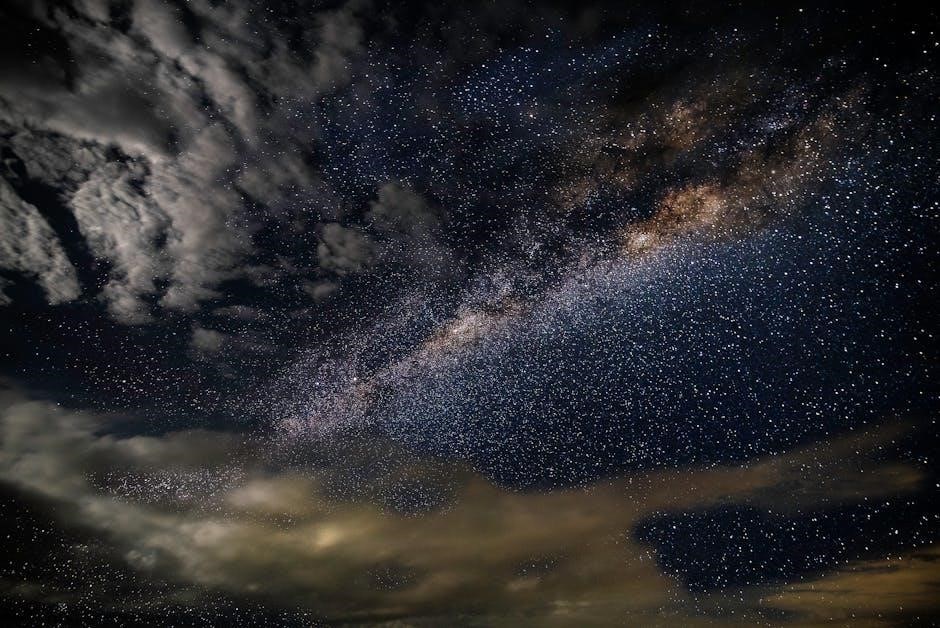
Begin your astronomical adventure simply – look up! No equipment is needed to appreciate constellations, planets, and the moon’s phases. Dark adaptation is key!
Learning Constellations
Constellations are patterns of stars, historically used for navigation and storytelling. They offer a fantastic starting point for navigating the night sky, providing recognizable landmarks amongst countless stars. Begin with prominent constellations like Ursa Major (the Big Dipper), easily found in the northern hemisphere, and Orion, a winter constellation visible worldwide.
Utilize star charts, planispheres, or astronomy apps to aid in identification. These tools illustrate the positions of constellations at different times of the year and from various locations. Start by learning a few key stars within each constellation, then gradually connect the dots to form the complete pattern.
Don’t be discouraged if you don’t recognize everything immediately; practice makes perfect! Regularly observing the night sky and actively trying to locate constellations will significantly improve your skills. Remember that constellations are not physically close together; the stars simply appear to be in the same area from our perspective on Earth. Keeping an astronomy diary can also help track your progress and observations.
Identifying Planets
Unlike stars, planets don’t twinkle as much and appear as steady points of light. They also wander across the sky relative to the fixed stars over days and weeks – hence the name “planet,” meaning wanderer. Identifying planets requires patience and a bit of planning.
Use astronomy apps or software to determine which planets are visible in your location and at what time. These tools provide accurate positions and help distinguish planets from stars. Look for brighter, more colorful objects; Venus and Mars, for example, often have a distinct reddish or yellowish hue.
Pay attention to the planet’s position relative to constellations. Planets will appear to move through the constellations over time. Observing the same area of the sky over several nights will reveal this movement. Remember to consult a current sky map or app, as planetary positions change constantly. Start with the brightest planets – Venus, Mars, Jupiter, and Saturn – as they are easier to spot.
Observing the Moon
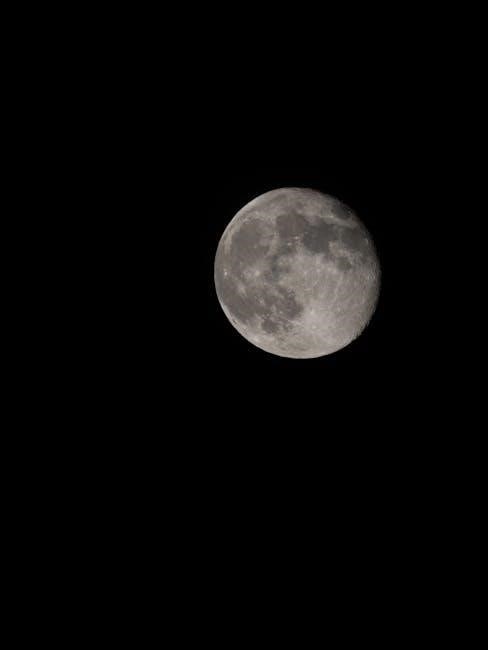
The Moon is arguably the most accessible and rewarding celestial object for beginner astronomers. No telescope is needed to appreciate its craters, mountains, and vast, dark plains (maria). Observing the Moon changes dramatically depending on its phase.
A full Moon is bright and washes out fainter details, making it less ideal for observing. The best views are during the partial phases – first quarter and last quarter – when shadows accentuate the lunar features, revealing incredible texture and depth. Binoculars enhance these details significantly.
Focus on the terminator, the line separating the illuminated and dark portions of the Moon. This area offers the most dramatic contrast, highlighting craters and mountains. Sketching what you see can improve your observational skills and appreciation for lunar geology. Remember to protect your eyes when observing a bright Moon; avoid prolonged direct viewing.
Essential Tools for Beginners
Start with binoculars, star charts, and astronomy apps. These tools unlock the night sky, aiding in constellation identification and object location for new observers.
Binoculars: A First Telescope
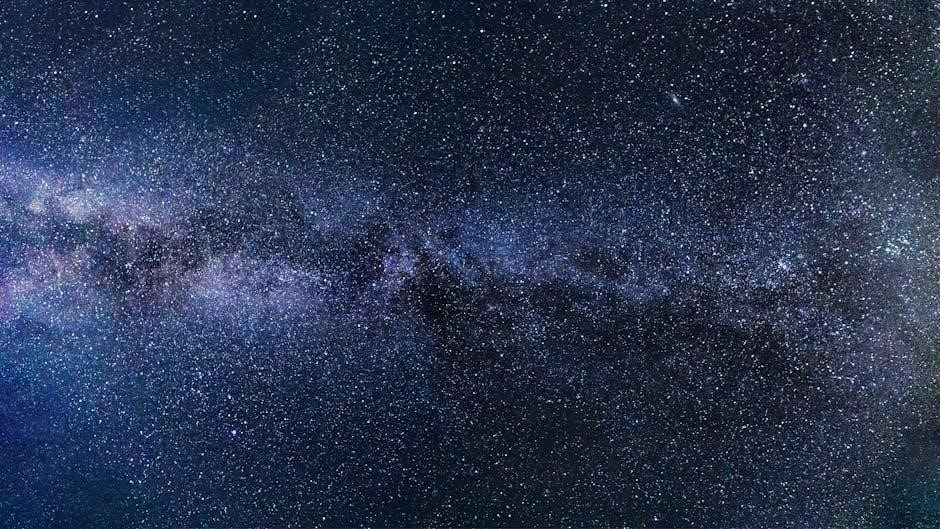
Before investing in a telescope, binoculars offer an accessible and affordable entry point into astronomy. They’re remarkably versatile, providing wider fields of view compared to many telescopes, making them excellent for scanning the Milky Way and locating brighter deep-sky objects; A good pair of binoculars, even a relatively inexpensive set, can reveal craters on the Moon, the Galilean moons of Jupiter, and the hazy disks of some nebulae.
When choosing binoculars, look for a magnification of 7x to 10x and an objective lens diameter of 50mm. This combination provides a good balance between magnification, brightness, and stability. Larger objective lenses gather more light, crucial for observing faint objects. Consider binoculars with coated lenses to minimize light loss and enhance contrast. Remember to stabilize your binoculars – using a tripod adapter is highly recommended for comfortable, prolonged viewing. They are easily transportable, making them ideal for spontaneous stargazing adventures, and a fantastic stepping stone towards more advanced astronomical equipment.
Star Charts and Planispheres
Navigating the night sky can seem daunting, but star charts and planispheres are invaluable tools for beginners. Star charts are detailed maps of the constellations and celestial objects, showing their positions at a specific time and location. They help you identify stars, planets, and deep-sky objects, fostering a deeper understanding of the cosmos.
A planisphere, often called a star wheel, is a rotating star chart that allows you to dial in the date and time to see which constellations are visible. This interactive tool is particularly useful for learning how the night sky changes throughout the year. Utilizing these resources, alongside monthly sky guides or astronomy software, will significantly enhance your observational experience. Don’t hesitate to ransack your public library for a wealth of astronomical literature. Keeping an astronomy diary alongside these charts will help track your progress and discoveries, solidifying your knowledge and enjoyment of the universe.
Astronomy Apps and Software
Modern technology offers incredible resources for budding astronomers. Numerous astronomy apps and software programs can transform your smartphone or computer into a virtual planetarium. These tools utilize your location and time to display a real-time map of the night sky, identifying stars, planets, constellations, and even deep-sky objects as you point your device towards them.
Many apps offer augmented reality features, overlaying constellation lines and object labels directly onto your view of the sky. Software programs provide more advanced features like telescope control, image processing, and detailed astronomical data. These digital aids are excellent for planning observing sessions, learning about celestial objects, and tracking your discoveries. They complement traditional methods like star charts and planispheres, providing a dynamic and interactive learning experience. Dive into these digital resources to unlock a new dimension of astronomical exploration and enhance your understanding of the universe.

Understanding Telescopes
Explore beyond the naked eye! Telescopes gather light, revealing distant wonders. Learn about refractor, reflector, and catadioptric designs to choose the best instrument for you.
Types of Telescopes (Refractor, Reflector, Catadioptric)
Telescopes come in various designs, each with unique strengths. Refractor telescopes, utilizing lenses to bend light, offer sharp, high-contrast images, ideal for planetary observation. However, larger refractors can become quite expensive and bulky. Reflector telescopes employ mirrors to gather and focus light, providing larger apertures for observing faint deep-sky objects at a more affordable price point. They require occasional collimation – aligning the mirrors for optimal performance.
Catadioptric telescopes combine both lenses and mirrors, offering a compact design with a long focal length. Popular types include Schmidt-Cassegrain and Maksutov-Cassegrain. These telescopes are versatile, suitable for both planetary and deep-sky viewing. They generally offer excellent image quality and portability. Choosing the right type depends on your observing goals, budget, and desired level of maintenance. Beginners often find reflectors a good starting point due to their cost-effectiveness and light-gathering ability, while those prioritizing ease of use might lean towards a catadioptric design.
Choosing Your First Telescope
Selecting your initial telescope requires careful consideration. Beginners should prioritize aperture – the diameter of the light-gathering element – over high magnification. Larger apertures reveal fainter objects and more detail. A telescope with an aperture of at least 76mm (3 inches) is recommended. Avoid telescopes marketed with extremely high magnification claims, as these are often unrealistic and result in blurry images.
Consider the telescope’s mount. An equatorial mount compensates for Earth’s rotation, making tracking celestial objects easier, but can be complex for newcomers. An altazimuth mount is simpler to use, moving up/down and left/right. Portability is also key; a smaller, lighter telescope encourages more frequent use. Research different models, read reviews, and if possible, test telescopes at a local astronomy club before making a purchase. Remember, starting with a smaller, manageable telescope is often better than investing in a large, complicated one you won’t use.
Telescope Maintenance
Preserving your telescope’s performance requires regular, yet simple, maintenance. Dust accumulation on lenses or mirrors degrades image quality. Gently clean optical surfaces with a specialized lens cleaning solution and microfiber cloth – avoid harsh chemicals or abrasive materials. Protect lenses from scratches by replacing dust caps immediately after use.
Periodically check and tighten screws on the mount and optical tube assembly to prevent instability. Lubricate moving parts, like slow-motion controls, with a silicone-based lubricant. Store your telescope in a dry, dust-free environment, ideally in its original packaging or a dedicated telescope case. Collimation, aligning the mirrors in reflector telescopes, is crucial for sharp images and should be checked and adjusted as needed. Familiarize yourself with your telescope’s specific maintenance requirements outlined in the user manual for optimal longevity and viewing enjoyment.

Deep-Sky Objects (DSOs) for Beginners
Explore nebulae, galaxies, and star clusters! Begin with Messier Objects (M Objects) and the Caldwell Catalog – rewarding targets for amateur astronomers starting out.
Messier Objects (M Objects)

Charles Messier, an 18th-century French astronomer, compiled a catalog of over 100 fuzzy objects that weren’t comets. These became known as Messier Objects, or M Objects, and are fantastic starting points for deep-sky observing. He diligently sought comets, but these nebulous patches often interfered with his searches, prompting him to list them so he wouldn’t mistake them for comets again!
M Objects are relatively bright and can be located with binoculars or a small telescope, making them ideal for beginners. They include a diverse range of celestial wonders: globular clusters (densely packed groups of stars), open clusters (loosely bound stars), nebulae (clouds of gas and dust where stars are born), and galaxies (vast systems of stars, gas, and dust).
Popular M Objects to begin with include M42, the Orion Nebula – a stunning sight even in binoculars – and M13, the Hercules Globular Cluster, a beautiful, bright cluster visible as a fuzzy patch. Each object, commonly referred to as M1, M2, and so on, offers a unique glimpse into the vastness and beauty of the universe. Observing these objects provides a rewarding experience and builds observational skills.
Caldwell Catalog
Sir Patrick Moore, a beloved British astronomer, created the Caldwell Catalog in the mid-1990s as a follow-up to the Messier Objects. It comprises 109 deep-sky objects visible from moderately dark locations with a small to medium-sized telescope – offering a step up in challenge from the Messier list. Moore aimed to provide a curated selection of visually appealing targets for amateur astronomers.
Unlike the Messier catalog, which focused on objects easily mistaken for comets, the Caldwell Catalog prioritizes objects offering stunning visual detail and variety. It includes galaxies, globular clusters, open clusters, planetary nebulae, and dark nebulae, providing a broader range of celestial experiences.
The Caldwell objects are numbered from 1 to 109, and many are brighter and more accessible than some of the fainter Messier objects. They represent a fantastic progression for observers wanting to expand their deep-sky observing skills. Examples include Caldwell 2, the North America Nebula, and Caldwell 6, the Double Cluster in Perseus, both offering breathtaking views through modest equipment.
Resources for Further Learning
Expand your knowledge! Explore astronomy books, magazines, and online communities. Connect with local clubs for observing sessions and shared celestial discoveries.
Astronomy Books and Magazines
Delve deeper into the universe with a wealth of published resources! For beginners, “Observational Astronomy: a Plan for the Beginner” by S.J. O’Meara is highly recommended, offering practical guidance for starting observations. Explore titles covering constellations, planets, and deep-sky objects to build a solid foundation.
Magazines like Sky & Telescope and Astronomy provide monthly updates on celestial events, observing tips, and stunning astrophotography. These publications cater to all levels, from novices to experienced astronomers, offering accessible articles and detailed charts. They’re excellent for staying current with astronomical discoveries and planning observing sessions.

Consider introductory books that explain fundamental concepts in a clear and engaging manner. Many options are available, covering topics like the solar system, stars, galaxies, and cosmology. Don’t hesitate to visit your local library or bookstore to browse and find resources that suit your interests and learning style. A well-chosen book or magazine can significantly enhance your astronomical journey!
Online Astronomy Communities
Connect with fellow stargazers and expand your knowledge through vibrant online communities! Numerous forums and social media groups cater specifically to astronomy enthusiasts of all levels. These platforms offer a fantastic opportunity to ask questions, share observations, and learn from experienced astronomers.
Websites like Cloudy Nights host active forums covering various aspects of amateur astronomy, including equipment reviews, observing reports, and astrophotography discussions; Reddit’s r/astronomy is another popular hub, providing a diverse range of content and a welcoming atmosphere for beginners. Facebook groups dedicated to astronomy also abound, offering localized observing opportunities and discussions.
Participating in these communities can significantly accelerate your learning curve. Don’t be afraid to post questions, even if they seem basic – most astronomers are eager to share their passion and expertise. Online communities foster a sense of camaraderie and provide invaluable support as you embark on your astronomical adventure; Embrace the collective knowledge and enjoy the shared wonder of the universe!
Local Astronomy Clubs
Enhance your astronomical journey by joining a local astronomy club! These groups provide a unique opportunity to connect with experienced observers, attend star parties, and gain hands-on experience with various telescopes. Clubs often host public observing nights, allowing beginners to look through different instruments and receive guidance from knowledgeable members.
Finding a club near you is easier than you think. The Astronomical League maintains a directory of affiliated clubs across the country, making it simple to locate a group in your area. Local clubs frequently organize workshops on topics like telescope setup, observing techniques, and astrophotography. These workshops are invaluable for beginners seeking to develop their skills.
Beyond the educational benefits, astronomy clubs offer a strong sense of community. Sharing your passion with like-minded individuals is incredibly rewarding. Star parties, where members gather to observe the night sky, are a highlight for many. Don’t hesitate to reach out and attend a meeting – you’ll be welcomed with open arms!