Article Plan: Free PDF Printable Leather Holster Patterns
This article details crafting leather holsters using freely available PDF patterns. It explores resources, leather selection, necessary tools, and customization techniques for diverse holster styles.
Leather holsters represent a timeless method for securely carrying firearms, blending functionality with a classic aesthetic. Historically, skilled artisans meticulously crafted these essential accessories, but today, a surge in readily available resources empowers hobbyists and seasoned leatherworkers alike. Printable PDF patterns have revolutionized holster making, democratizing access to designs previously confined to experienced craftspeople or expensive custom orders.
These patterns offer a convenient and cost-effective starting point, eliminating the need for extensive design work. They provide precise outlines and instructions, guiding users through the cutting, molding, and assembly process. The Leather Guy, a prominent online leather supplier, exemplifies the growing support for leather crafting, offering not only materials but also guidance for projects.
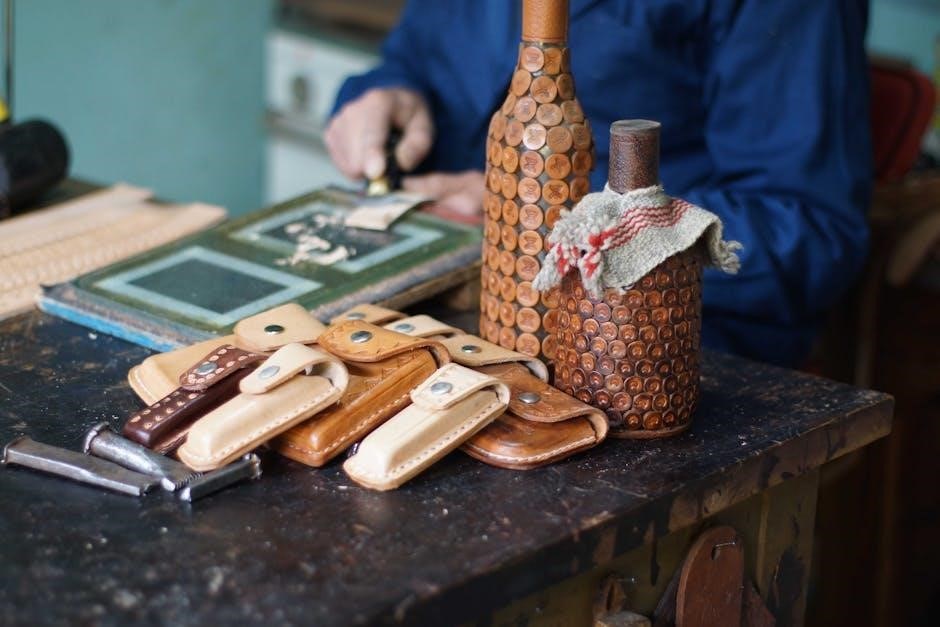
Whether you’re a beginner eager to learn the fundamentals or an experienced maker seeking new designs, printable PDF holster patterns unlock a world of possibilities. From simple inside-the-waistband (IWB) holsters to more complex shoulder or chest rigs, the options are vast. Springfield Leather and Montana Leather further contribute to this accessibility, providing quality supplies and fostering a community of leather enthusiasts. This guide will navigate you through the process, ensuring a successful and rewarding holster-making experience.
Why Use Printable PDF Holster Patterns?
Printable PDF holster patterns offer a compelling array of advantages for both novice and experienced leather crafters. Primarily, they represent a significant cost saving compared to purchasing pre-made holsters or commissioning custom work. The accessibility of free patterns online, coupled with the relatively low cost of leather and basic tools, makes holster making a financially viable hobby.
Furthermore, these patterns provide unparalleled customization options. Users can easily modify designs to perfectly fit their firearm, body type, and carry preferences. This level of personalization is often unattainable with commercially produced holsters. The detailed instructions included with most patterns simplify the construction process, even for those with limited leatherworking experience.
Beyond convenience and cost, PDF patterns foster creativity and skill development. As highlighted by resources like The Leather Guy, learning leatherworking techniques – such as cutting, molding, and stitching – is incredibly rewarding. Workshops offered by companies like those mentioned, teach essential skills. The ability to create a functional and aesthetically pleasing holster from scratch builds confidence and opens doors to more advanced leather crafting projects. They are a gateway to a fulfilling and practical craft.
Essential Leather Types for Holsters
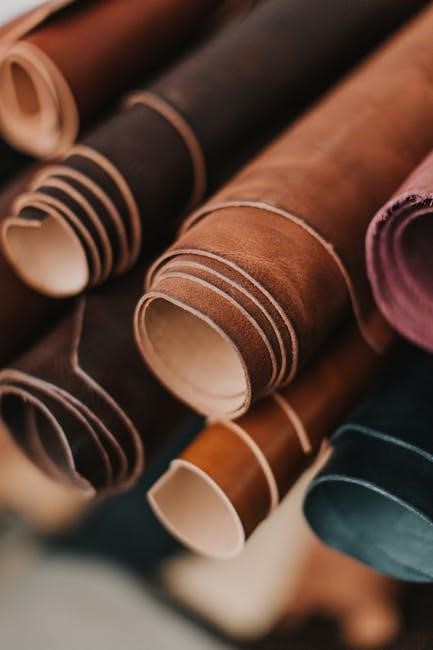
Selecting the right leather is paramount when crafting a durable and functional holster. Several types stand out as particularly well-suited for this purpose. Full-grain leather, renowned for its strength and longevity, is a top choice, offering excellent resistance to wear and tear. It develops a beautiful patina over time, enhancing its aesthetic appeal.
Vegetable-tanned leather is another popular option, favored for its ability to hold its shape when molded – crucial for a secure firearm fit. This type is often used for detailed tooling and embossing. Chrome-tanned leather, while softer and more pliable, can be suitable for certain holster designs, particularly those prioritizing comfort.
As noted by Montana Leather and other suppliers, understanding leather origins is key. Cattle hide is the most common, offering a balance of cost and performance. However, exotic leathers like alligator or ostrich, while visually striking, are considerably more expensive. The Leather Guy emphasizes considering the leather’s thickness and temper alongside its type. Ultimately, the best leather depends on the desired holster style, budget, and level of craftsmanship.
Leather Grades & Their Suitability for Holster Making
Leather is graded based on quality and appearance, significantly impacting holster durability and aesthetics. Full-grain leather represents the highest grade, utilizing the entire grain of the hide. It’s incredibly strong, showcasing natural markings and developing a rich patina, making it ideal for premium holsters demanding longevity.
Top-grain leather is the second highest, having the split layer removed. It’s more uniform in appearance than full-grain but still offers good strength. Genuine leather, a mid-grade option, comes from leftover splits after creating top-grain, often coated for a consistent look. While affordable, it lacks the durability of higher grades.
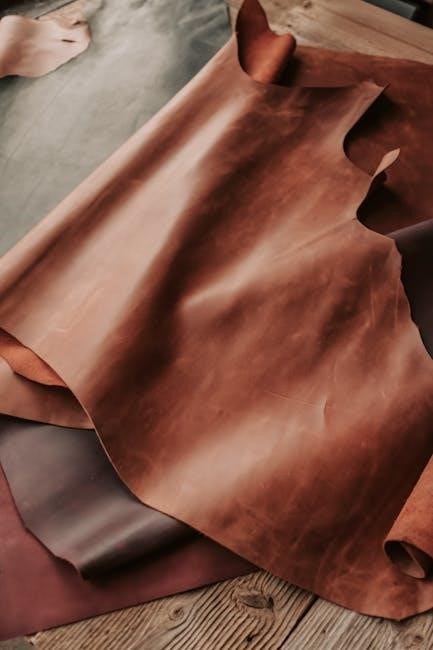
Bonded leather, the lowest grade, consists of leather scraps glued together. It’s the least expensive but also the weakest and least suitable for holsters requiring structural integrity. As highlighted by various leather suppliers like The Leather Guy, choosing a higher grade ensures a holster that withstands repeated use and provides reliable firearm retention. For serious holster projects, full or top-grain leather is highly recommended.
Understanding Leather Thickness (Weight/Oz) for Holsters
Leather thickness, measured in ounces (oz), is crucial for holster construction, directly impacting its rigidity and ability to maintain its shape. An ounce equates to 1/64 of an inch. For most holsters, a weight between 8-9oz is considered a good starting point, offering a balance of structure and workability.
Lighter weights, like 5-7oz, are suitable for minimalist designs or inside-the-waistband (IWB) holsters where flexibility is desired. However, they may not provide sufficient support for larger firearms. Heavier weights, 10oz and above, are ideal for outside-the-waistband (OWB) holsters or those requiring maximum retention and durability.
The type of firearm also dictates the appropriate thickness. Larger, heavier guns necessitate thicker leather to prevent the holster from collapsing or losing its form. Suppliers like Montana Leather emphasize selecting the correct weight based on the intended use and firearm size. Experimentation is key, but understanding this fundamental aspect ensures a functional and long-lasting holster;
Tools & Materials Needed Beyond the Pattern
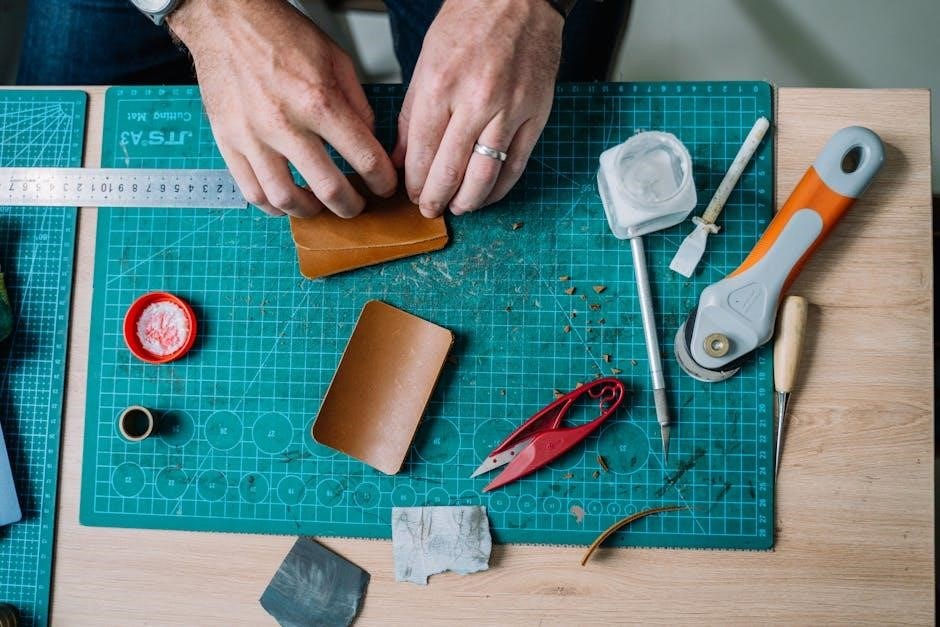
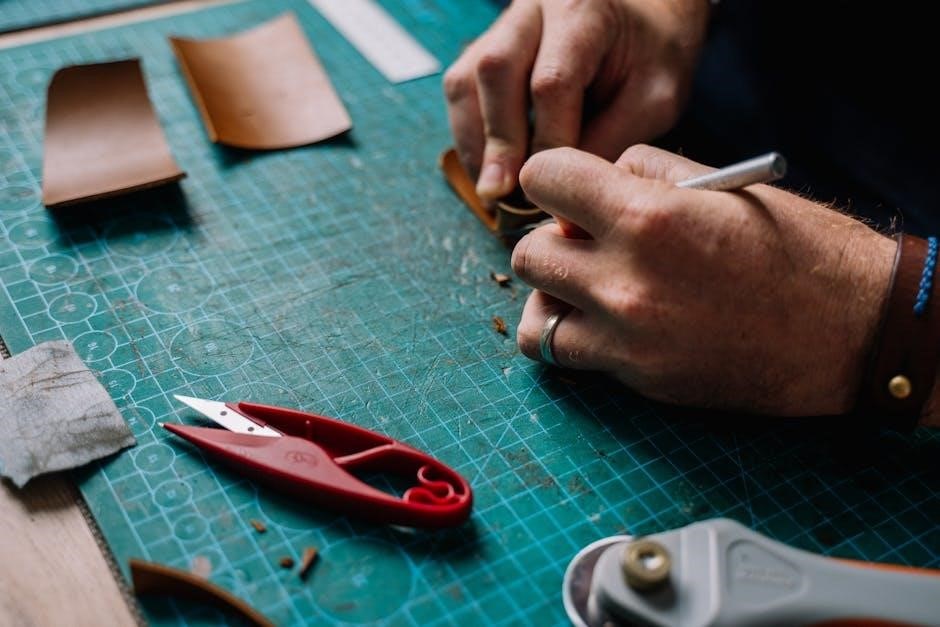
Beyond a free PDF pattern, successful holster creation demands specific tools and materials. A robust knife or rotary cutter is essential for precise leather cutting, alongside a steel ruler for accurate measurements. Leather cement, contact cement, or rubber cement secures layers during construction.
Harness needles and strong thread – waxed linen or nylon – are vital for durable stitching. A stitching awl creates consistent stitch holes, while a stitching pony holds the work securely. Edge bevelers and slickers refine the leather edges, providing a professional finish.
Hardware like rivets, snaps, and buckles may be required depending on the holster style. A rivet setter and snap setting tools are necessary for secure attachment. Leather dyes and finishes protect the leather and enhance its appearance. The Leather Guy offers a comprehensive range of these supplies. Don’t forget a cutting mat to protect your work surface!
Popular Holster Styles & Pattern Availability
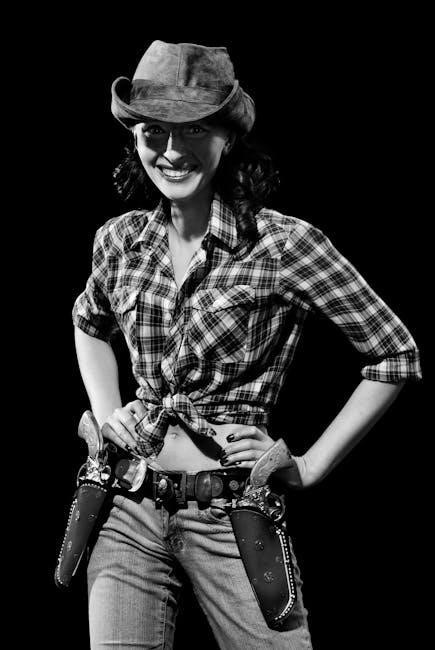
Numerous holster styles cater to different carry preferences and firearm types. Open carry options, like cowboy-style or pancake holsters, often have readily available free PDF patterns. Concealed carry designs, including Inside the Waistband (IWB) and Outside the Waistband (OWB) holsters, are also frequently found online.
Shoulder holsters, while more complex, sometimes have basic pattern outlines accessible for experienced crafters. Chest holsters, favored for specific activities, may require more adaptation from general patterns. Pattern availability varies; some sites offer designs for specific gun models, while others provide generic templates.
Springfield Leather and Montana Leather, while primarily suppliers, often link to resources or communities where patterns are shared. Searching online forums and leather crafting groups reveals numerous free options. Remember to verify pattern accuracy and adjust for your firearm’s dimensions. Careful selection ensures a functional and secure holster.
Open Carry vs. Concealed Carry Holsters: Pattern Considerations
The choice between open and concealed carry significantly impacts holster pattern requirements. Open carry holsters prioritize accessibility and retention, often featuring a high ride and minimal coverage. Patterns typically emphasize a secure grip and a comfortable fit for extended wear, often utilizing a pancake or molded design.
Concealed carry holsters, conversely, demand a low profile and discreet design. IWB patterns focus on minimizing bulk and maximizing concealability, requiring precise molding to the body. OWB concealed carry patterns balance retention with the need to remain hidden under clothing.
PDF patterns for concealed carry often include adjustable cant and ride height options. Leather thickness is crucial; thinner leather conforms better for IWB, while thicker leather provides structure for OWB. Always prioritize safety and legal compliance when selecting and modifying patterns. Proper fit is paramount for both carry methods, ensuring secure firearm retention and comfortable use.
Inside the Waistband (IWB) Holster Patterns
IWB holster patterns are popular for concealed carry due to their discreet nature. Free PDF patterns typically require a moderate skill level, demanding precise cutting and molding of the leather. Key features include a curved profile to conform to the body and a reinforced opening for secure retention.
Many patterns incorporate adjustable cant, allowing the user to customize the angle of the firearm for optimal draw and comfort. Leather selection is critical; 8-9oz vegetable-tanned leather is commonly recommended for its balance of flexibility and durability. Patterns often include instructions for creating a sweat guard to enhance comfort during extended wear.
Consider patterns with reinforced stitching and a robust belt clip attachment. Modifying a basic IWB pattern can involve adding extra layers of leather for increased rigidity or adjusting the ride height. Remember to thoroughly test the holster with an unloaded firearm before carrying.
Outside the Waistband (OWB) Holster Patterns
OWB holster patterns offer a balance of concealment and accessibility, often favored for open or concealed carry depending on garment choice. Free PDF patterns range from simple slip-on designs to more complex options with retention straps or thumb breaks. These patterns generally require intermediate leatherworking skills, including accurate cutting, tooling, and stitching.
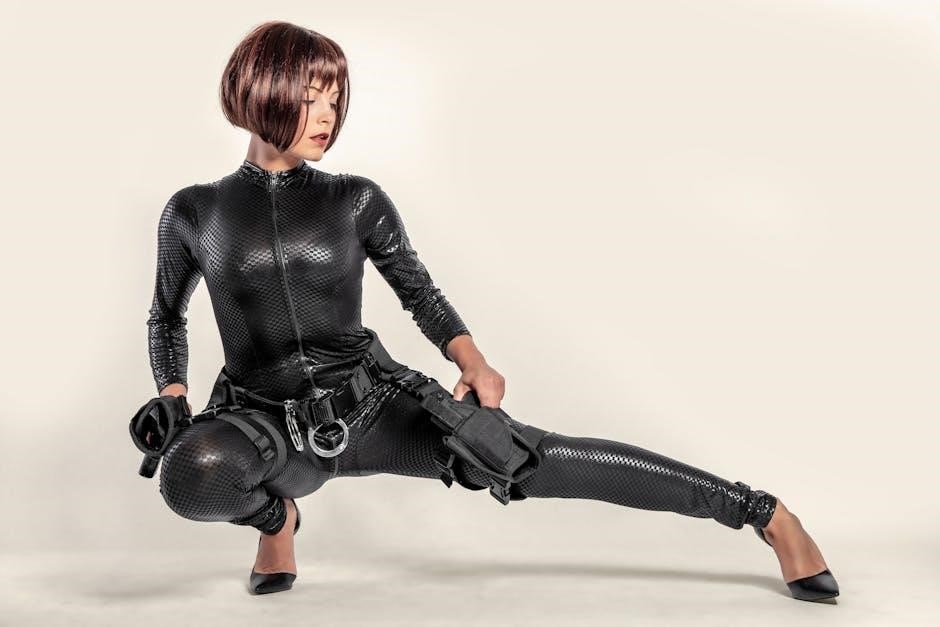
Leather thickness for OWB holsters typically ranges from 9-12oz, providing sufficient structure and durability. Vegetable-tanned leather is preferred for its ability to hold a molded shape. Patterns often feature a high-ride design for easier access and improved comfort. A well-fitted OWB holster should securely hold the firearm without excessive looseness.
Customization options include adding decorative tooling, adjusting the belt loop width, or incorporating a sweat shield. Ensure the pattern includes clear instructions for creating a properly reinforced opening and a secure belt attachment method. Always prioritize safety and retention when modifying or constructing an OWB holster.
Shoulder Holster Patterns: Complexity & Considerations
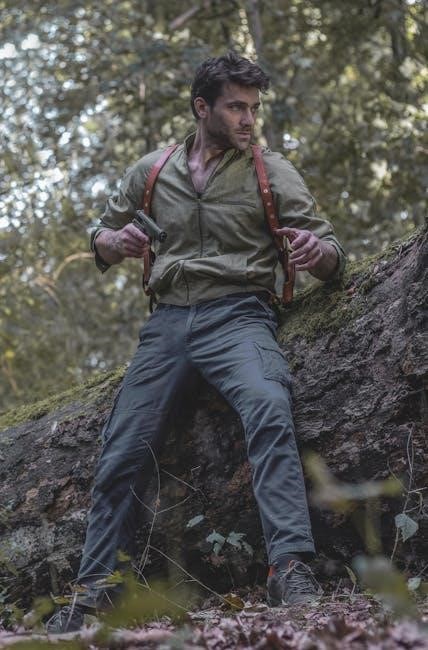
Shoulder holster patterns represent a significant step up in complexity compared to IWB or OWB designs. Free PDF patterns are less common due to the intricate shaping and precise fitting required for comfortable and safe carry. These patterns demand advanced leatherworking skills, including meticulous cutting, molding, and stitching techniques.
Constructing a shoulder holster necessitates heavier weight leather, typically 12-15oz, to maintain its shape and support the firearm’s weight. Vegetable-tanned leather is crucial for molding and retaining the holster’s form. Patterns usually involve separate components for the back plate, shoulder straps, and individual gun pockets.
Key considerations include strap adjustability, proper weight distribution, and secure retention. A well-designed shoulder holster should allow for a full range of motion without interfering with drawing the firearm. Customization often involves adjusting strap length, adding padding for comfort, or incorporating quick-release buckles. Safety is paramount; ensure a secure fit and reliable retention.
Chest Holster Patterns: Design & Functionality
Chest holsters, favored for outdoor activities and specific operational needs, present unique design challenges when utilizing free PDF patterns. Functionality centers around accessibility, comfort, and secure firearm retention during movement. Patterns often feature a cross-chest configuration, distributing weight across the torso.
These patterns typically involve multiple leather pieces – a base plate, adjustable straps, and a molded gun pocket. Heavy-duty, vegetable-tanned leather (10-14oz) is essential for structural integrity and molding capabilities. The design must accommodate the firearm’s size and shape, ensuring a snug yet accessible fit.
Key considerations include strap adjustability for various body types, breathable backing materials for comfort, and robust retention mechanisms. Some patterns incorporate magazine pouches or accessory attachment points. Customization might involve adding padding, altering strap placement, or reinforcing stress points. Proper fit is crucial to prevent interference with movement or clothing.
Sources for Free Printable PDF Leather Holster Patterns
Finding reliable free PDF patterns requires diligent searching, as quality varies significantly. Online leather crafting communities and forums are excellent starting points; members often share designs and modifications. Websites dedicated to leatherworking frequently host pattern sections, though free options may be limited.
Dedicated pattern websites, while often offering premium designs, sometimes provide a selection of free introductory patterns. Pinterest and similar platforms can yield results, but verifying pattern accuracy and completeness is crucial. Be cautious of patterns lacking detailed instructions or clear diagrams.
Websites like Instructables sometimes feature user-submitted holster patterns, offering a blend of instructions and community feedback. Remember to always check the licensing terms before using any downloaded pattern. The Leather Guy, a prominent leather supplier, may occasionally offer free resources or links to community-shared patterns. Thoroughly inspect each pattern for scaling accuracy before printing and cutting leather.
Modifying & Customizing Printable Holster Patterns
Printable PDF patterns serve as excellent starting points, but often require adjustments for a perfect fit or personalized style. Scaling the pattern is frequently necessary to accommodate specific firearm models; ensure consistent scaling across all pattern pieces. Adding or removing material to the pattern alters retention and ride height.
Customization extends beyond fit. Experiment with adding decorative tooling, stitching patterns, or incorporating unique hardware. Consider modifying the pattern for different carry methods – adapting an OWB pattern for IWB use, for example. Reinforcing stress points with additional leather layers enhances durability.
Before cutting leather, mock up the holster using cardboard or scrap material to test modifications. Careful planning and iterative adjustments are key. Remember that significant alterations may require re-drafting certain pattern sections. Learning basic pattern drafting skills empowers greater customization control. The Leather Guy emphasizes project planning, which applies directly to pattern modification.
Leather Finishing & Care for Holsters
Proper finishing protects your handcrafted holster and enhances its longevity and appearance. Applying a leather finish, such as beeswax or a specialized leather conditioner, seals the leather, preventing moisture absorption and cracking. Dyeing or staining the leather before assembly adds color and depth, with numerous techniques available for achieving desired effects.
Regular care is crucial. Periodically clean the holster with a damp cloth to remove dirt and debris. Avoid harsh chemicals or abrasive cleaners. Conditioning the leather every few months replenishes natural oils, maintaining its flexibility and preventing dryness. Montana Leather highlights the importance of proper care for leather goods.
For holsters exposed to harsh conditions, consider applying a protective coating like Resolene. Inspect stitching regularly for wear and tear, and repair promptly. Proper maintenance ensures your holster remains a functional and aesthetically pleasing companion for years. Remember, leather is a natural material requiring consistent attention.