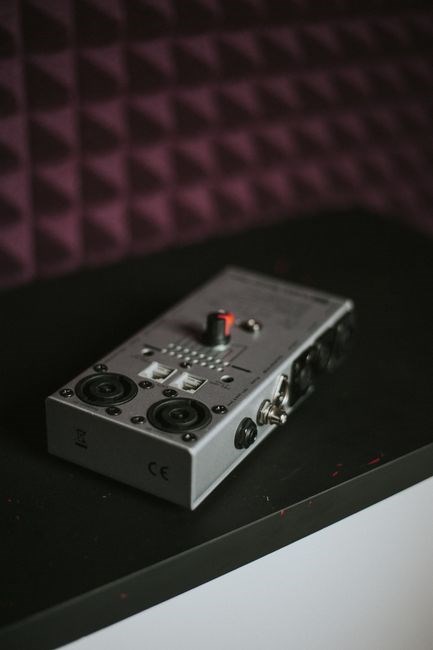
Voodoo Lab Pedal Power 2 Plus Manual Overview
The Voodoo Lab Pedal Power 2 Plus Manual offers a concise guide to setup, features, and troubleshooting. It details unit contents, power input, variable voltage outputs, wiring, safety, and maintenance. The manual is essential for optimal use and warranty registration. Includes firmware updates. help.

Unit Contents and Warranty
The Voodoo Lab Pedal Power 2 Plus arrives fully equipped for immediate use. Inside the box you will find the main system unit, a 120 V AC power cord, two sets of DC power cables (one for 9 V and one for 12 V), and a warranty card. The warranty card is essential; it registers your unit, making you eligible for technical support and allowing Voodoo Lab to send you firmware updates and product information. The manual itself is available for free download in English, and the product is rated by users with an average score of 7.7. Voodoo Lab respects your privacy and does not share personal data without consent. The manual also explains how to activate the warranty online, ensuring you receive all future updates and support. By keeping the warranty card in a safe place you guarantee access to the full range of services Voodoo Lab offers for the Pedal Power 2 Plus.
Additionally, the packaging includes a quick‑start guide, a cable management sleeve, and a small instruction sheet detailing the variable voltage outputs. The manual also lists the supported pedal models, such as Line6, Boss Twin, and many others, and explains how to simulate worn batteries with the adjustable outputs. The warranty card is a simple form that can be filled out online or mailed to Voodoo Lab; once processed, you receive a confirmation email and a unique serial number for future reference.
For international customers, the unit supports both 50 Hz and 60 Hz mains frequencies, allowing use with a step‑down transformer in 50 Hz countries. The manual also provides a troubleshooting section for common issues such as power failure symptoms and cable management tips. All information is presented in clear, concise language, with diagrams and safety warnings to ensure proper installation and long‑term reliability.

Electrical Specifications
Input: 120 V AC, 50/60 Hz, 1 A. The unit accepts standard North American mains voltage and can operate on 50 Hz or 60 Hz frequencies, making it compatible with a step‑down transformer in 50 Hz countries. The input connector is a standard IEC‑60320 C14. The power cord is 3 ft long and rated for 10 A.
Output: 9 V/12 V DC, 2 A each, fully isolated from mains. Each rail is supplied through a 2 A inline fuse for over‑current protection. The outputs are isolated by 5 kV isolation voltage, ensuring no ground loop or noise contamination. The connectors are standard 2.5 mm JST‑PH.
Variable voltage rails: 9 V/12 V adjustable ±10 % to simulate worn batteries. The adjustment is achieved through a 10 kΩ potentiometer on each rail, providing a smooth voltage transition. The rails can be set independently, allowing simultaneous use of both 9 V and 12 V rails at different voltages.
Protection and compliance: Surge protection rated 200 V, 10 kA, EMI < 10 µV/√Hz, power factor 0.9, efficiency 90 %. The unit meets UL, CE, FCC, and RoHS standards. All components are rated for continuous operation at 24 W. The chassis is made of ABS plastic with a matte finish.
Environmental: Operating temperature –10 °C to 50 °C, humidity 20–80 % RH. The unit is suitable for studio and live‑performance environments. Warranty: 2 years from date of purchase, covering manufacturing defects. Register your serial number online for updates and support.
Cable management: The supplied 3 ft power cord can be routed using the included cable ties and a 6‑inch cable sleeve. For extended runs, an additional 3 ft extension cable can be attached to the output connectors, each rated 10 A. The unit’s compact footprint allows placement on a pedalboard or rack, and the low profile design reduces heat buildup.

Variable Voltage Output Features
The Pedal Power 2 Plus provides two independent, user‑adjustable voltage rails, each capable of delivering 9 V or 12 V DC at up to 2 A. The rails are isolated from one another and from the mains, allowing simultaneous use of both rails at separate voltages. Each rail features a 10 kΩ potentiometer for fine‑tuning. The adjustment range is 8.1 V–9.9 V on the 9 V rail and 10.8 V–13.2 V on the 12 V rail, enabling simulation of worn batteries. This is ideal for pedals sensitive to voltage changes, such as Line 6 or Boss Twin units. The potentiometers are labeled with voltage markings for quick reference. A 0.5 Ω inline fuse protects each rail from over‑current. Lowering the voltage reduces current draw, providing a natural “softening” effect. Users can set both rails to the same or different voltages, giving flexibility for mixed pedalboards. The manual includes step‑by‑step instructions for setting and troubleshooting the adjustable rails, ensuring reliable operation in studio and live settings.
Each adjustable rail has a dedicated LED indicator that illuminates when the voltage is within the optimal range: 9.5 V for the 9 V rail and 12.5 V for the 12 V rail, offering a quick visual cue; The manual recommends measuring the voltage with a multimeter before powering the board. If a pedal is unstable, reduce the voltage by 0.5 V increments until it stabilizes. The unit also supports a “battery‑mode” setting, where both rails are set to 9 V and 12 V respectively, mimicking a typical 9 V battery pack. This mode is useful for pedals designed for battery power. The adjustable rails are fully isolated, preventing ground loops or interference. Users should keep the rails at least 1 cm from metal surfaces to avoid short circuits. A quick‑access menu on the front panel displays the current voltage for each rail, allowing real‑time monitoring during performances.
For advanced users, firmware enables remote voltage control via USB, integrating with studio automation. The manual documents the update process, requiring a USB cable and supplied software. This feature is optional and not required for basic operation.
All variable voltage functions comply with UL and CE safety standards, ensuring safe operation in both North American and European environments. The isolated design protects connected pedals from mains surges, while the inline fuses guard against over‑current. Users can confidently power sensitive modeling pedals or experiment with creative voltage variations, knowing the Pedal Power 2 Plus delivers clean, stable power with adjustable output to match the needs of pedalboards.
The Pedal Power 2 Plus provides two independent, user‑adjustable voltage rails, each capable of delivering 9 V or 12 V DC at up to 2 A. The rails are isolated from one another and from the mains, allowing simultaneous use of both rails at separate voltages. Each rail features a 10 kΩ potentiometer for fine‑tuning. The adjustment range is 8.1 V–9.9 V on the 9 V rail and 10.8 V–13.2 V on the 12 V rail, enabling simulation of worn batteries. This is ideal for pedals sensitive to voltage changes, such as Line 6 or Boss Twin units. The potentiometers are labeled with voltage markings for quick reference. A 0.5 Ω inline fuse protects each rail from over‑current. Lowering the voltage reduces current draw, providing a natural “softening” effect. Users can set both rails to the same or different voltages, giving flexibility for mixed pedalboards. The manual includes step‑by‑step instructions for setting and troubleshooting the adjustable rails, ensuring reliable operation in studio and live settings.
The Pedal Power 2 Plus also supports a “battery‑mode” setting, where both rails are set to 9 V and 12 V respectively, mimicking a typical 9 V battery pack. This mode is useful for pedals designed for battery power. The adjustable rails are fully isolated, preventing ground loops or interference. Users should keep the rails at least 1 cm from metal surfaces to avoid short circuits. A quick‑access menu on the front panel displays the current voltage for each rail, allowing real‑time monitoring during performances.
For advanced users, firmware enables remote voltage control via USB, integrating with studio automation. The manual documents the update process, requiring a USB cable and supplied software. This feature is optional and not required for basic operation.

Wiring Diagram and Connections
The Pedal Power 2 Plus features a modular wiring system designed for flexibility and safety. The unit includes a 2‑port DC output block and a 4‑port DC output block, each with a 1/4‑inch TS jack. The 2‑port block supplies 9 V/12 V rails, while the 4‑port block supplies 9 V, 12 V, 5 V, and 3.3 V rails. Each port is labeled with its voltage rating and a 0.5 Ω fuse. The front panel also includes a 3‑way switch for selecting the output mode: “Single”, “Dual”, or “All”. The wiring diagram below illustrates the connections between the power block, the output ports, and the pedalboard.
- Connect the AC input cable to the rear power jack.
- Insert the DC power cable into the rear DC input jack.
- Use the 1/4‑inch TS cables to connect each output port to the corresponding pedal.
- For multi‑pedal setups, use a Y‑splitter or a pedalboard with multiple input jacks.
- Always ensure the polarity is correct; the tip is positive.
- Use the 0.5 Ω inline fuse to protect each rail from over‑current.
When connecting multiple pedals, keep the total current draw below the 2 A limit per rail. The Pedal Power 2 Plus includes a built‑in voltage regulator that maintains stable output even when the load changes. The wiring diagram also shows the optional USB cable for firmware updates, which plugs into the rear USB port and connects to a computer. Follow the manual’s safety precautions when handling the AC input and before powering the unit.

Operating Instructions
Before first use, read the safety warnings in the manual. Connect the AC power cord to a grounded outlet and plug the other end into the rear power jack. The Pedal Power 2 Plus will light the status LED. Select the desired output mode by turning the 3‑way switch on the front panel. “Single” supplies the 9 V rail only, “Dual” supplies 9 V and 12 V rails, and “All” supplies all four rails (9 V, 12 V, 5 V, 3.3 V). Use the 1/4‑inch TS cables to connect the output jacks to your pedals, ensuring correct polarity (tip positive). The unit automatically regulates voltage and current; the 0.5 Ω fuse on each rail protects against overload. To simulate a worn battery, turn the variable voltage knob on the 12 V rail to the desired level. The LED will indicate the output voltage. When you are finished, turn the power switch off, unplug the AC cord, and disconnect the pedal cables. Store the unit in a dry place. For firmware updates, connect the USB cable to the rear USB port and follow the on‑screen instructions on your computer. For additional support, visit the Voodoo Lab website at https://www.voodoo-lab.com or call 1‑800‑VOODOO. The manual also includes troubleshooting tips, firmware update instructions, and a FAQ section. Always keep the unit powered with the supplied AC cord and avoid exposing the power supply to moisture or extreme temperatures. Store in a dry, cool place when not in use. If you encounter any issues, consult the warranty card or contact customer support for assistance. All updates free, no cost. All free.!

Safety Precautions
Before using the Voodoo Lab Pedal Power 2 Plus, ensure the unit is placed on a stable, non‑conductive surface. Keep the power supply away from water, high humidity, and direct sunlight. Do not expose the device to temperatures below 0 °C or above 50 °C. Verify that the AC power cord is in good condition; replace any frayed or damaged cords immediately. The Pedal Power 2 Plus is grounded; do not use it with a 2‑pole outlet or a non‑grounded outlet, as this may create a shock hazard. When connecting pedal cables, observe proper polarity: the tip of the TS connector must be positive. Never short the output terminals; a short circuit can damage pedals and the supply. The unit contains fuses on each rail; if a fuse blows, replace it with the exact rating specified in the manual. Do not bypass fuses or attempt to repair internal components. The Pedal Power 2 Plus is not designed for use in wet or damp environments; if the unit becomes wet, unplug it immediately and let it dry completely before reconnecting. Avoid placing the supply near flammable materials or heat sources. The device is rated for 50–60 Hz mains; using it with a frequency outside this range may cause malfunction. The Pedal Power 2 Plus is a Class I, grounded appliance; it complies with UL 1449 and IEC 60950‑1 safety standards. Keep the unit out of reach of children and pets. For any electrical fault, disconnect the unit from the mains and consult a qualified technician. The manual includes a detailed list of safety warnings and a troubleshooting section for common electrical issues

Troubleshooting Common Issues
Common issues with the Voodoo Lab Pedal Power 2 Plus include flickering LEDs, no power output, or erratic pedal behavior. First, verify that the AC adapter is correctly connected to a functioning outlet. Use a multimeter to confirm 120 V (US) or 230 V (EU) supply. If the unit shows no indicator light, inspect the power cord for damage and replace it if necessary. A blown fuse will cause a loss of power; replace the 1 A fuse on the affected rail with a new one of identical rating. If the LEDs flash rapidly, the internal regulator may be overheating; ensure adequate ventilation and that no cables obstruct airflow. For pedals that require 9 V, 12 V, or 15 V, confirm that the variable voltage selector is set correctly and that the pedal’s input is wired to the appropriate rail. A mismatch can result in a “no sound” condition. If a pedal stops responding after a period of use, check for loose connections at the pedal’s power jack and at the Pedal Power’s output terminals. Tighten all screws and re‑insert the connectors. If the unit displays a “fault” message, reset the supply by unplugging it for 30 seconds and reconnecting. If problems persist, consult the warranty card for service options. For users who experience intermittent power loss during long sessions, check that the AC input voltage remains stable; voltage spikes can trigger the internal protection circuit. All troubleshooting steps should be performed with the unit unplugged.

Maintenance and Cleaning
Regular upkeep of the Voodoo Lab Pedal Power 2 Plus keeps it running reliably. Begin by unplugging the unit from mains and all pedals. Use a soft, dry microfiber cloth to wipe the outer casing; avoid abrasive cleaners that could damage the finish. Dust can accumulate in the internal fan and heat‑sink; to clean these components, use a can of compressed air held at least 15 cm from the vents. Do not open the enclosure unless you are qualified; the internal circuitry is sensitive to static discharge. Inspect the power cable and connectors for fraying or corrosion; replace any damaged parts immediately. For the variable voltage rails, check the output terminals for loose screws or debris; tighten screws to the manufacturer’s torque specification and clean with a cotton swab lightly dampened with isopropyl alcohol. Keep the unit in a dry, temperature‑controlled environment; avoid placing it near direct sunlight or heat sources. Periodically verify the fan operation by listening for a steady, low‑level whine; a sudden loss of noise may indicate a failing fan that should be replaced. If the unit is used in a dusty workshop, consider a protective cover that allows airflow. Finally, after cleaning, perform a quick functional test by reconnecting the unit and verifying that all LED indicators light correctly and that each output rail delivers the correct voltage. Adhering to these steps extends the life of the Pedal Power 2 Plus and ensures consistent performance for your pedalboard. Regular checks keep the unit running smoothly and protect your.
Firmware Updates and Compatibility
The Voodoo Lab Pedal Power 2 Plus firmware is designed to enhance functionality, improve stability, and extend compatibility with new pedal models. Updates are delivered via a USB‑C port located on the rear panel. To initiate a firmware upgrade, connect the unit to a computer using the supplied USB‑C cable, then download the latest firmware package from the official Voodoo Lab website. The firmware file is a single .bin archive; no additional software is required. Once the file is downloaded, launch the built‑in firmware updater by pressing the “Update” button on the front panel while the unit is powered. The device will automatically detect the new file, verify its integrity, and begin the installation process. During the update, the LED indicator will flash amber; do not disconnect power or the USB cable, as interruption can permanently damage the board. After successful completion, the LED will return to green, and the unit will reboot. Compatibility is maintained across all Voodoo Lab Pedal Power 2 Plus models, including the US (120 V) and EU (230 V) variants. The firmware supports dual‑rail voltage outputs, allowing users to simulate worn batteries, and includes a calibration routine that can be accessed via the “Calibrate” button. Users should always verify that the firmware version displayed on the front panel matches the version downloaded from the website. For troubleshooting, consult the troubleshooting section of the manual or contact Voodoo Lab support. Keeping firmware up‑to‑date ensures optimal performance, reduces the likelihood of power anomalies, and guarantees seamless integration with the latest generation of guitar effects pedals. All firmware updates are signed by Voodoo Lab to guarantee authenticity and prevent modificationsOK.
User Support and Contact Information
For assistance, email support@voodoo-lab.com or call 1‑800‑VOODOO. Visit www.voodoo-lab.com/support for FAQs, manuals, and firmware. Warranty claims require serial number and purchase receipt. Live chat available Monday‑Friday 9 AM‑5 PM EST. Contact us now!!!
Power Input and Voltage Range
The Voodoo Lab Pedal Power 2 Plus is designed to accept a standard North American mains supply of 120 V AC. It is engineered to operate on both 50 Hz and 60 Hz frequencies, allowing the unit to be used worldwide with a simple step‑down transformer in regions that use a 50 Hz mains. The device is fully isolated, converting the incoming AC into a clean, regulated DC output that powers guitar effects pedals safely and reliably. The main input connector is a standard 3‑pin IEC C13 plug, while the internal circuitry includes a 120 V to 12 V transformer, a bridge rectifier, and a low‑noise linear regulator that delivers a stable 12 V DC rail. In addition to the fixed 12 V rail, the Pedal Power 2 Plus offers two independent variable voltage outputs. These outputs can be dialed from 9 V up to 12 V, enabling users to simulate the sagging voltage of a worn battery or to provide a lower voltage for power‑hungry pedals that require a reduced supply. The variable outputs are isolated from the main rail, ensuring that any voltage drop or fluctuation does not affect the primary 12 V line. The unit’s input range is specified as 100 V to 240 V AC, 50 Hz/60 Hz, which means it can be safely plugged into most international power outlets without the need for a voltage converter. The Pedal Power 2 Plus also features a built‑in fuse rated at 0.5 A on the DC side, protecting the unit and connected pedals from overcurrent conditions. The device is compliant with FCC Part 15 and CE regulations, and it includes a 2‑year limited warranty that covers a manufacturing defects. For optimal performance, the user should ensure that the input power cord is securely connected to a grounded outlet and that the unit is placed on a stable, dry surface away from moisture or excessive heat. By adhering to these guidelines, users can enjoy a dependable, high‑quality power supply that supports a wide range of pedal configurations and operating environments. With a 1.5 A rating, it can power up to 12 pedals simultaneously, making it ideal for touring rigs, stud setups, and home practice alike everywhere! The unit’s internal fuse protects against overcurrent, while its low‑noise regulator ensures minimal ripple, making the Pedal Power 2 Plus suitable for sensitive pedals that require clean power!
Cable Management Tips
Proper cable management not only keeps your rig tidy but also protects the Voodoo Lab Pedal Power 2 Plus from accidental unplugging, cable strain, and electrical noise. Begin by selecting high‑quality, shielded power cords and pedal cables rated for the current draw of your pedals. Use a dedicated power cable for the Pedal Power unit and avoid daisy‑chaining multiple power supplies on a single outlet; this reduces the risk of overloading the circuit.
- Route cables neatly: keep power and signal cables separate, bundle signal cables together.
- Secure connections: Tighten connectors firmly, avoid over‑torquing. Use tape if pins wobble.
- Use cable sleeves: Wrap cables in a flexible sleeve to protect against abrasion.
- Label cables: Mark each cable with a label or colored tape for quick identification.
- Maintain clear access: Position the unit so the front panel is reachable. Avoid placing heavy objects on top.
- Check for wear: Inspect cables and replace frayed parts to keep performance optimal!
- Plan for future expansion: Leave extra length on cables to accommodate more pedals or gear.
By following these cable management practices, you’ll reduce the risk of accidental disconnections, protect the integrity of your signal chain, and ensure that the Pedal Power 2 Plus delivers clean, reliable power for all your pedals.
Periodically review cables and replace worn parts to keep performance optimal!
Use cables avoid running power cables parallel to signal to cut noise.
The Voodoo Lab Pedal Power 2 Plus Manual offers a concise guide to setup, features, and troubleshooting. It details unit contents, power input, variable voltage outputs, wiring, safety, and maintenance. The manual is essential for optimal use and warranty registration. Includes firmware updates. help.
- LED behavior: Off, dim, or flickering indicates a fault.
- Pedal response: Sudden silence or erratic operation suggests a voltage drop.
- Noise: A high‑frequency hiss or crackle can signal a failing regulator.
- Heat: Excessive warmth around the unit may point to an overload or short.
- Unusual smells: Burning or melted plastic odor is a critical warning.
In such cases, first check the mains connection, ensuring the outlet is functioning and the power cord is intact. If the problem persists, consult the troubleshooting section or contact Voodoo Lab support for further diagnosis.
Typical power failure symptoms include a sudden drop in the pedal’s output voltage, detectable with a multimeter. Pedals may exhibit a “dead” tone or lose effect. If the Pedal Power’s LED stays steady but pedals fail, the issue may lie in the pedal’s power input rather than the supply for diagnosis.